Inside Coral Gables’ approach to AI adoption
Coral Gables has spent more than a decade integrating artificial intelligence into its infrastructure, public services and internal operations, but its approach began with a practical concern rather than a desire to become a smart city.
Located in a hurricane-prone part of Florida, the city initially used intelligent systems to improve the resilience of its communications networks. It has since expanded AI into cybersecurity, public safety, traffic management, customer service and a citywide digital twin.
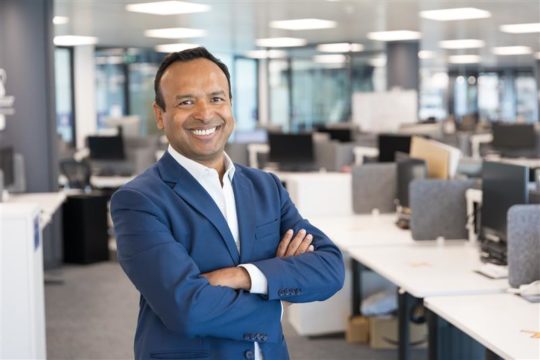
Raimundo Rodulfo, Director of Innovation and Technology and Chief Innovation Officer for Coral Gables, tells Cities Today that his previous engineering career helped inform the city’s early adoption.
“AI is not new in engineering,” he says. “I’ve been using it for over 30 years in my career.”
After joining the city in 2004, Rodulfo helped develop a communications network with four layers of redundancy, encompassing fibre-optic, wireless, cellular and satellite systems. Automated failovers were introduced to protect emergency communications and services during hurricanes, power failures and other incidents.
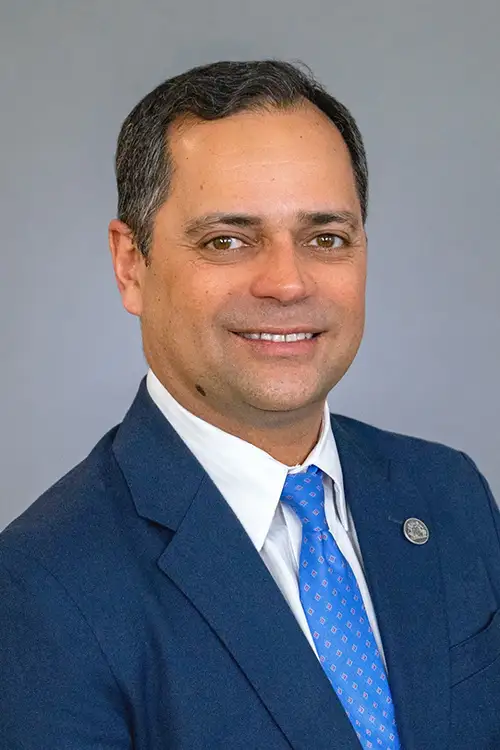
Raimundo Rodulfo, Director of Innovation and Technology and Chief Innovation Officer, Coral Gables
“That was our priority before we talked about smart cities and AI,” Rodulfo says. “We were talking about resiliency. We were talking about sustainability and business continuity of critical services.”
From resilience to public safety
The city subsequently introduced AI-powered behavioural analytics to strengthen its cyber defences before beginning to install thousands of connected sensors in 2014. Computer vision technology was used to classify vehicles, objects and pedestrians, with the resulting information feeding into Coral Gables’ Community Intelligence Centre.
One early demonstration came during a downtown event attended by around 50,000 people in 2015. After a couple reported their six-year-old child missing, police contacted the centre and an engineer located the child within two minutes using AI-supported image analysis.
“We used AI morphological analytics and automation to find a missing child in just two minutes,” he explains. “After that, we had other missing children at different events. We have even found some dogs with the AI system.”
Coral Gables continued to expand its connected infrastructure through smart lighting, poles and interactive kiosks. An urban analytics platform was introduced in 2016-17 to process millions of data points, while subsequent projects included public-facing chatbots, enterprise AI agents and an internally developed digital twin.
“The journey started very humbly in 2012-13 with network adoption,” Rodulfo says. “Today, we have a lot of solutions that are frontier AI-type solutions, and we use the frontier models from OpenAI, Gemini, Anthropic and others to incorporate that into our smart city lab.”
The city now has more than 30 AI initiatives being considered or implemented through its Centre of Excellence. These range from automating administrative processes to using video language models to identify crashes, graffiti or abandoned packages across its camera network.
“If we have a crash in any of our thousands of cameras, the AI agents automatically tell us that there was a crash,” he adds. “If somebody is painting graffiti in any of the cameras that we have in public areas and parks, we are going to get an automatic alert.”
Choosing high-impact AI projects
Technology projects are assessed according to their strategic relevance rather than adopted simply because a new capability has become available.
“Our mission is to provide excellent services to our community,” he says. “It’s quality of life that never changes. Different technologies are just tools. We are in the quality-of-life business, the customer-service business and the economic-growth business.”
Each initiative is rated according to its risk, implementation effort and potential return on investment. Projects offering high value with relatively little effort can be prioritised as quick wins, while more complicated proposals are considered by a steering committee involving the city manager’s office and leaders from across the organisation.
“We are talking about mitigating risks, managing risks and looking for high-ROI, high-impact AI use cases,” Rodulfo explains. “There are things that require too much effort but low ROI. Maybe we don’t do those, or we do them later.”
The governance structure is supported by the NIST AI Risk Management Framework, alongside separate frameworks covering cybersecurity and wider risk management. Coral Gables has also introduced acceptable-use policies, departmental AI liaisons and training for elected officials, senior managers and employees.
AI education extends beyond the municipal workforce. The city works with businesses, schools and universities, while its smart city research laboratory has hosted more than 200 interns, ranging from high-school students to postdoctoral fellows.
Improving services through connected data
Several tools are also changing how residents interact with the authority. AI agents can answer telephone enquiries, provide information and transfer callers to the appropriate employee. Chatbots can create service requests and route them directly to the relevant department.
“You can call a number and AI is going to help you get the service and information that you need and transfer you to the right person with a conversation in plain language,” he says. “You get a lot of automation that helps with customer service and user experience.”
The same infrastructure has produced benefits across several departments. Rodulfo says crime fell by more than 40 percent between 2016 and 2018 as the police department used the city’s connected technology, while traffic accidents declined by approximately 45 percent. Traffic engineers have used predictive analytics to improve intersections, crossings and pedestrian safety.
Data gathered through the network is made available through the Coral Gables Smart City Hub, allowing businesses, residents, researchers and public agencies to access real-time and historical information from traffic, environmental, flood and weather sensors.
“We democratised access to that smart city data for the entire community,” Rodulfo says. “That includes real-time and historical data from thousands of sensors throughout the city.”
The digital twin brings together thousands of geospatial layers connected to systems covering asset and land management, parks, public safety, parking, traffic and the environment. Officials can use it for virtual inspections, predictive analysis and simulations involving flooding, natural disasters or changing traffic conditions.
Rodulfo says much of the infrastructure has been planned and engineered internally, reducing the city’s reliance on outsourcing. His central advice to other authorities is therefore to invest first in their employees.
“Build your human capital first,” he says. “Take the noise out and focus on mission and vision. Be very pragmatic to deliver quality-of-life services and improvements to your community.”
Main image: Francisco Blanco | Dreamstime.com