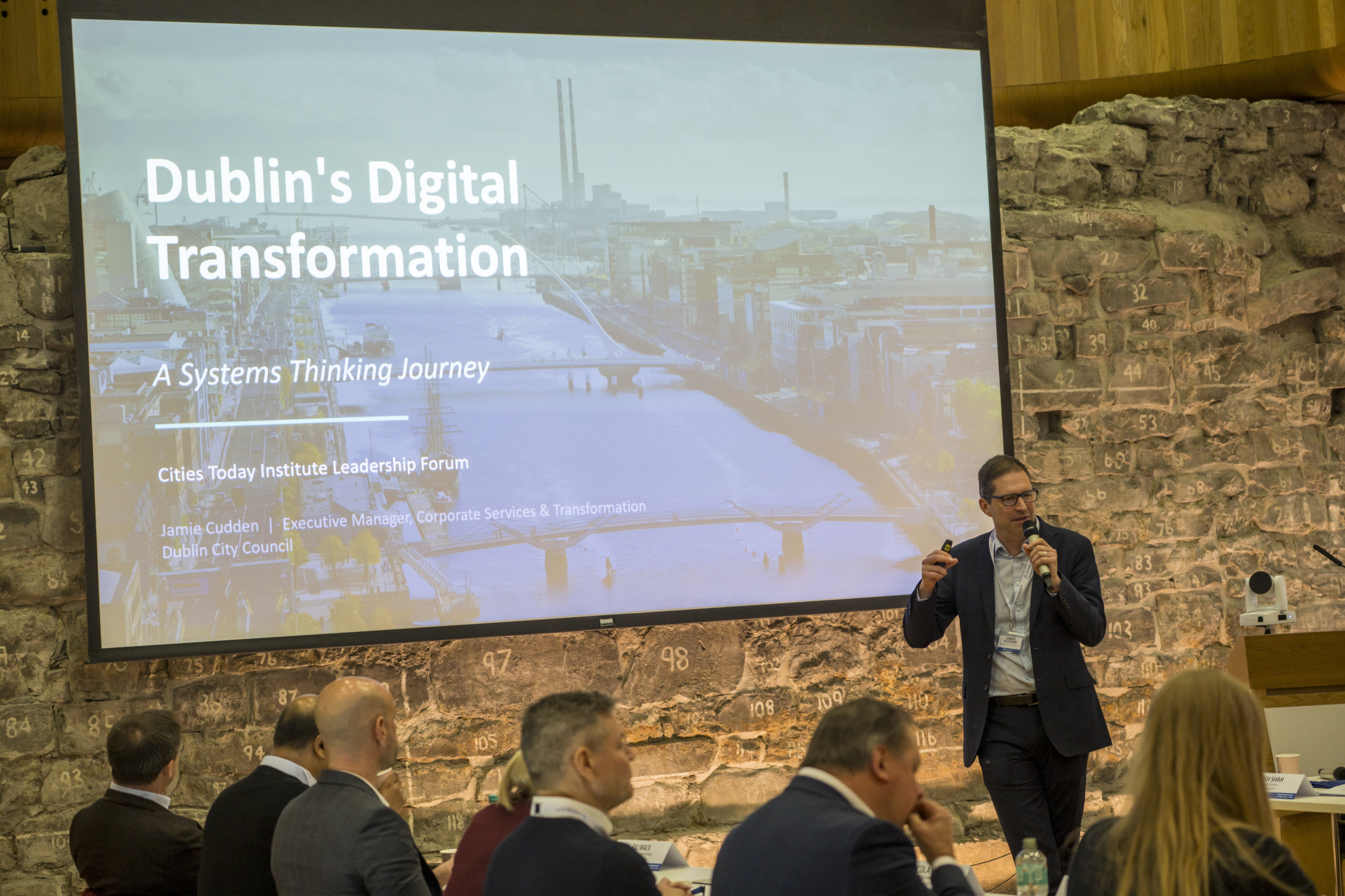
As Ireland’s capital city prepares to launch its AI strategy, Jonathan Andrews spoke to Jamie Cudden, Executive Manager for Corporate Services & Transformation with Dublin City Council, a founder member of the City Innovation Network
Dublin City Council has established what it describes as Ireland’s first Generative AI Lab dedicated to local government, creating a structured environment where staff can test artificial intelligence tools, develop practical use cases and build organisational capability before wider deployment across council services.
Through a combination of formal oversight groups, mandatory staff training and controlled experimentation, Dublin is seeking to balance innovation with public trust, transparency and compliance as AI becomes increasingly embedded in local government operations.
An AI strategy for Dublin City Council is scheduled for publication in the third quarter of 2026 and will set out the organisation’s vision and principles for deploying and scaling AI.
Jamie Cudden, Executive Manager, Corporate Services & Transformation, Dublin City Council, says the objective is to realise the benefits of AI while ensuring strong governance and accountability.
“We are focusing on human oversight, transparency, privacy, fairness, accountability and security from the outset, rather than treating governance as something added later,” he says.
Building governance before scale
Dublin City Council has introduced a two-tier governance structure to oversee AI adoption across the organisation.
An AI Governance Group provides strategic oversight and decision-making around policy, acceptable use, organisational readiness and priority use cases. Alongside it, an AI Technical Group focuses on implementation matters including infrastructure, tool assessment, permissions, security, cyber risk, technical evaluation and support for pilots and use cases.
The groups bring together representatives from IT, Digital, Legal, Data, HR, Corporate Services and Transformation.
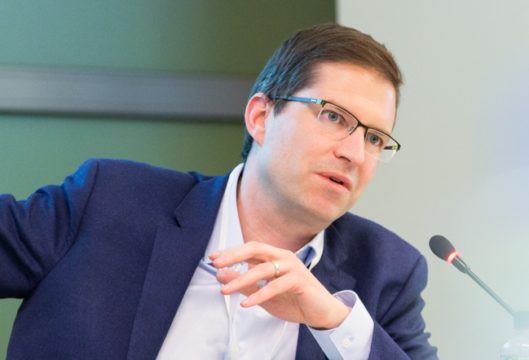
Jamie Cudden, Executive Manager, Corporate Services & Transformation, Dublin City Council
“Coordination happens across business, innovation, information systems, data protection and cybersecurity functions so that AI proposals are considered from multiple perspectives before they move forward,” says Cudden.
The council’s approach is informed by the Irish public service framework for responsible AI and by the requirements and direction of the EU AI Act.
Prioritising use cases
The council evaluates AI proposals according to business value and organisational need. Potential projects are assessed against questions such as whether they solve a genuine service or operational problem, can be implemented safely and align with wider organisational priorities.
Particular focus is being placed on use cases that improve internal productivity, strengthen decision-making, enhance customer service and support better use of data.
“We ask: does this solve a real service or operational problem, can it be implemented safely, and is it aligned with wider organisational priorities?” adds Cudden.
He says proposals are considered through a governance lens rather than a novelty factor.
“This helps ensure that AI activity is linked to broader business and service delivery objectives, rather than being run as standalone experimentation,” he says.
A central part of Dublin’s strategy is the GenAI Lab, launched in February 2025 in partnership with the ADAPT Research Ireland Centre and Trinity Business School. The initiative is described as Ireland’s first Generative AI Lab dedicated to local government.
The lab functions as a sandbox environment where council teams can work with researchers to identify opportunities, test ideas, develop prototypes and build organisational capability.
Rather than allowing unrestricted experimentation, the lab operates within a structured framework where activity is logged, reviewed and supported by governance and technical oversight.
“The emphasis is on learning by doing, but within a framework that protects the organisation, staff and the public,” explains Cudden.
The lab is being used to identify practical opportunities across council services while helping staff develop familiarity with emerging AI capabilities. Researchers and council teams work together to explore where generative AI can add value while ensuring projects remain grounded in governance, ethics, transparency and public trust.
Guardrails and responsible deployment
The council has developed staff guidance on generative AI and introduced governance structures and controlled environments to evaluate potential use cases.
Areas of focus include data protection, information governance, human review of outputs, transparency, security controls and awareness of bias and error in AI-generated content.
The council is also placing emphasis on the use of approved tools with appropriate safeguards rather than consumer-grade platforms.
“Our guardrails are built around the principle of responsible use before scale,” he says.
Workforce development forms a significant part of Dublin’s AI programme.
The council has published AI guidelines for staff and introduced an introductory AI training course which is mandatory for employees. The 80-minute training programme provides foundational knowledge on AI opportunities, risks and responsible use. More than 500 staff have completed the training to date.
Dublin is now preparing a broader programme that will target more than 3,000 staff, alongside more focused training and development packages for specific roles and functions.
“The intention is not just to give people access to tools, but to help staff understand where AI can be useful, where the risks lie, and how to use it responsibly in a public service setting,” Cudden explains.
The GenAI Lab also supports workforce development through workshops, engagement sessions and hands-on experimentation, allowing employees to gain practical experience while exploring potential use cases.
Collaboration and peer learning
Cudden says engagement with other cities, research institutions and professional networks helps the council compare governance approaches, share lessons from pilot projects and benchmark its progress.
“Collaboration plays a very important role in our approach. AI adoption in local government is still evolving, so peer exchange is extremely valuable in helping cities learn from each other, compare governance models, share lessons from pilots and avoid repeating mistakes.”
Dublin has engaged with cities including Sunderland and Madrid and participates in city-to-city initiatives such as the City Innovation Network.
The council also works through research partnerships and smart city networks to test ideas and contribute to wider discussions around responsible AI in urban government.
“Dublin has been active in engaging with other cities and networks on digital innovation, and we see this as essential to developing a practical and credible approach to AI,” he says. “Our involvement in initiatives such as city-to-city exchanges, research partnerships and wider smart city networks helps us test our thinking, benchmark progress and contribute to the wider conversation on responsible urban AI.”
Moving from pilots to enterprise deployment
The council is developing a pathway from pilot projects to operational deployment, including assessment criteria, governance checkpoints, support models and resourcing arrangements.
“At present, the focus has been on putting in place the foundations for responsible experimentation, governance and capability-building,” says Cudden. “The challenge we are facing now is scaling the pilots into enterprise solutions. The proof of concepts are delivering quick and impactful results across multiple use cases. We are scoping out how we support enterprise infrastructure that allows us to scale applications within a safe and secure, sovereign environment to utilise the latest AI models and tools that are GDPR compliant.”
The AI strategy due at the end of 2026 is expected to formalise the council’s vision for AI deployment and scaling.
“We need to be fully open and transparent in this regard so we can build trust with our staff, councillors and the public that we serve.”
Dublin’s AI governance model
Governance structure
- AI Governance Group responsible for policy, acceptable use, organisational readiness and prioritisation of use cases
- AI Technical Group responsible for infrastructure, tool assessment, security, permissions, cyber risk and pilot support
- Representation from IT, Digital, Legal, Data, HR, Corporate Services and Transformation
- Governance informed by the Irish public service framework for responsible AI and the EU AI Act.
GenAI Lab
- Launched February 2025
- Joint initiative between Dublin City Council, ADAPT Research Ireland Centre and Trinity Business School
- Described as Ireland’s first Generative AI Lab dedicated to local government
- Sandbox environment for research, testing, prototyping and capability building
- Supports identification of AI opportunities across council services
- Activity logged, reviewed and supported through governance and technical oversight.
AI guardrails
- Staff guidance on generative AI introduced in May 2025
- Human oversight of AI outputs
- Data protection and information governance controls
- Transparency requirements around AI use
- Security and cyber risk assessment
- Consideration of bias and AI-generated errors
- Focus on approved enterprise tools rather than consumer-grade platforms.
Workforce development
- Mandatory introductory AI training programme
- 80-minute foundation course
- More than 500 staff trained to date
- Future programme planned for more than 3,000 employees
- Additional role-specific training and development packages under development
- Workshops and hands-on learning delivered through the GenAI Lab.
Next steps
- AI strategy scheduled for publication in Q3 2026
- Development of enterprise AI infrastructure capable of supporting AI applications at scale
- Focus on secure and sovereign deployment environments
- GDPR-compliant deployment model
- Formal pathway being developed from pilot projects to operational deployment.
Main image: Alex Grichenko | Dreamstime.com